
Can a machine that does absolutely nothing help heal a pressure injury? A remarkable experiment from half a century ago suggests that the answer may be yes—but not for the reasons one might expect. It remains one of the most instructive examples of the placebo effect in wound healing.
The Allure of New Technology
The wound care industry offers an ever-expanding array of sophisticated dressings, electronic devices, biologic products, and other technologies promising to accelerate healing. Many are expensive, and their marketing often emphasizes innovation, advanced engineering, and impressive clinical results. But does newer necessarily mean better? And how much of the improvement attributed to a new product actually comes from the product itself?
An almost forgotten study from the 1970s offers a fascinating lesson about the power of expectations, the influence of technology on clinical behavior, and the enduring importance of basic nursing care.
An Ingenious Experiment
In 1975, investigators in Toronto, Canada, conducted an unusual experiment involving patients with pressure injuries—then called pressure ulcers or decubiti, and still widely known as bedsores—that had failed to respond to previous treatments. Rather than introducing another promising therapeutic technology, they constructed a machine that looked impressive but had absolutely no therapeutic function.
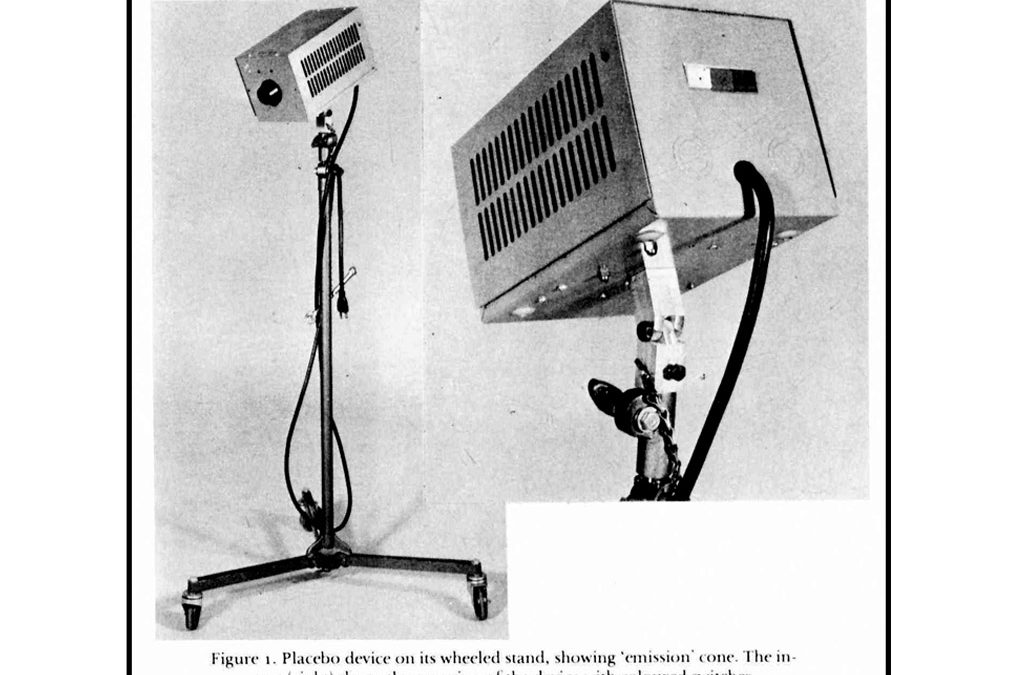
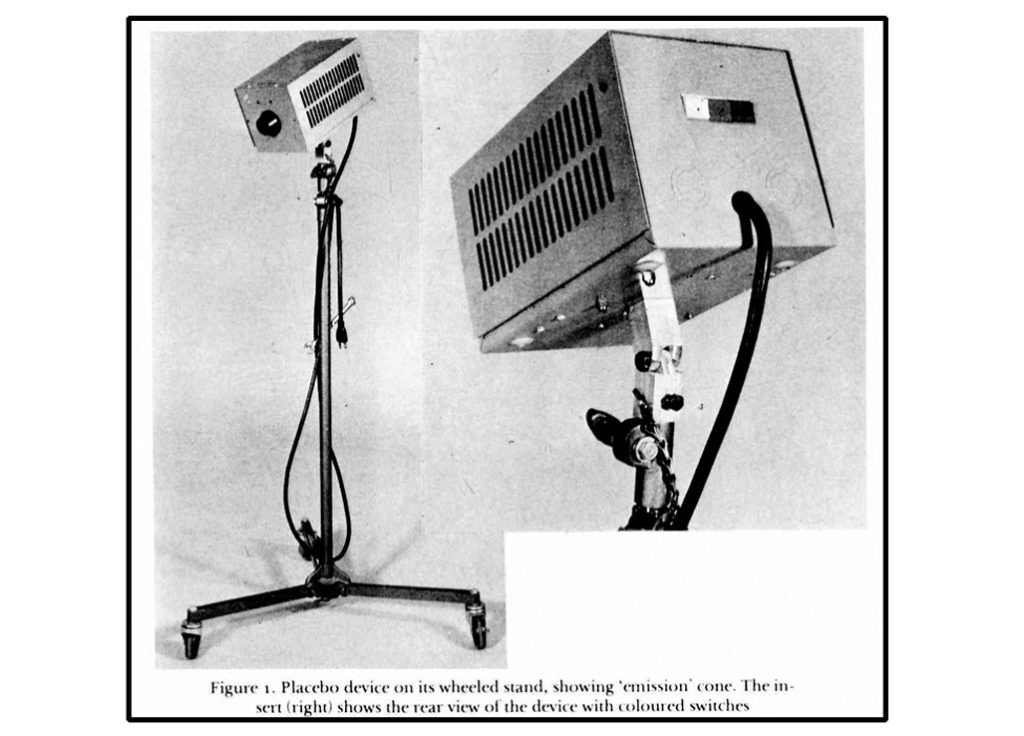
The apparatus consisted of a metal cabinet equipped with switches, colored lights, wiring, a cooling fan, and a cone supposedly designed to emit electromagnetic radiation. Staff were informed that the machine delivered a novel treatment capable of stimulating tissue growth.
In reality, the device emitted no therapeutic radiation. It was an elaborate placebo. Nevertheless, the treatment protocol was taken seriously. Patients underwent 30-minute sessions every two hours, during which pressure was relieved from the affected areas. Staff were also instructed to avoid loading the ulcers between treatments. Wound healing was documented using serial tracings, photographs, and measurements of wound area.
The Surprising Results
The pressure injuries began healing rapidly. The investigators documented substantial reductions in wound size, and the clinical staff became convinced that the machine was effective.
Yet the apparatus itself did nothing.
Why Did the Wounds Heal? The Placebo Effect in Wound Healing
The introduction of the supposedly revolutionary device had altered the behavior of the healthcare team. Staff paid greater attention to the wounds, followed a structured treatment schedule, and consistently relieved pressure from the affected areas.
This was the placebo effect in wound healing, but with an important twist. A wound cannot respond to suggestion. The placebo worked on the caregivers rather than on the tissue: staff who believed in the new treatment delivered better care. Researchers recognize a related phenomenon, the Hawthorne effect, in which people change their behavior simply because they know a new intervention is being watched and evaluated.
The investigators concluded that heightened staff interest and attention were important contributors to the observed healing response.
The experiment was small, involving five ulcers in four patients, and lacked a conventional control group. It therefore could not determine precisely how much improvement resulted from pressure relief, increased attention, or other changes in care. Because the patients were enrolled when their wounds had stalled, some improvement may also have reflected the natural tendency of an unusually poor course to move back toward average. Nevertheless, its central observation was striking: a completely inactive device appeared effective when its introduction was accompanied by improvements in fundamental nursing care.
What Does This Tell Us About Today’s Wound Care Market?
More than 50 years later, the lesson remains remarkably relevant. Modern wound care has become increasingly technology-driven. Clinicians are presented with expensive specialty dressings, electrical stimulation devices, negative pressure systems, biologic materials, and other products accompanied by claims of accelerated healing. Some of these interventions have demonstrated benefits in appropriately selected patients. Others have limited supporting evidence, particularly when compared with well-executed standard care.
The Toronto experiment illustrates an important source of bias in evaluating new treatments: the introduction of a novel intervention may change the intensity and quality of care surrounding it.
When a new product is introduced, clinicians may examine wounds more frequently, improve documentation, pay closer attention to positioning, or become more consistent in carrying out the treatment plan. If healing improves, the product may receive credit for benefits that actually resulted from these accompanying changes. This is why rigorous clinical trials, appropriate comparison groups, and careful attention to co-interventions are essential when evaluating wound care technologies.
The Fundamentals Still Matter
Pressure injury healing depends on much more than what is placed on the wound. Effective care requires pressure redistribution, appropriate repositioning and offloading, attention to nutritional needs, wound bed preparation, moisture management, and treatment of contributing medical conditions.
Equally important is the quality and consistency of nursing care. An expensive dressing cannot compensate for persistent pressure. A sophisticated device cannot overcome inadequate attention to the patient’s underlying condition. And no technology can substitute for a healthcare team that consistently implements a thoughtful, individualized care plan.
For older adults with frailty, multimorbidity, or limited healing potential, treatment decisions must also account for comfort, prognosis, goals of care, and the burdens imposed by increasingly complex interventions.
A Lesson Worth Remembering
The investigators who built the placebo machine were not suggesting that technology has no role in wound healing. Rather, they demonstrated how easily enthusiasm for innovation can obscure the therapeutic value of attentive, consistent care. Their findings raise a question that remains relevant whenever a new wound care product is introduced:
Is the patient improving because of the technology—or because the technology has finally prompted us to deliver better care?
Before investing in another costly intervention, clinicians should ask whether the fundamentals have been adequately addressed and whether the proposed product offers meaningful benefits beyond those achievable through high-quality standard care.
Questions to Ask Before Adopting a New Wound Care Product
- Was there a control group, and did it receive the same high-quality standard care?
- Were pressure redistribution, nutrition, and wound bed preparation optimized in every group studied?
- How many patients were studied, and for how long?
- Was healing measured objectively, ideally by evaluators who did not know which treatment each patient received?
- Who funded the research?
- Does the product offer a meaningful benefit for this particular patient, given the patient’s prognosis and goals of care?
Sometimes the most powerful intervention is not a new machine, an expensive dressing, or a technological breakthrough.
It is simply better care.
Reference: Fernie GR, Dornan J. The problems of clinical trials with new systems for preventing or healing decubiti. In: Kenedi RM, Cowden JM, Scales JT, editors. Bedsore Biomechanics. Baltimore: University Park Press; 1976. p. 315–320.
RELATED POSTS:
Wound Healing Products: From Ancient to Modern Mythology