
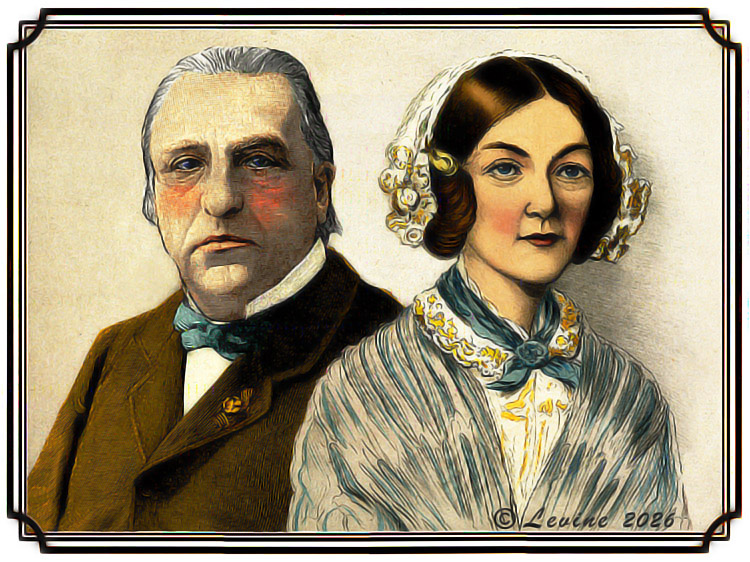
My article, Pressure Injuries and Skin Failure: The Search for Clarity, was published in the February 2026 issue of International Wound Journal (IWJ). It is open access and free to read. The article traces the idea of skin failure from its roots in the 19th century, with Jean-Martin Charcot and Florence Nightingale, to the present day, when the term means different things to different people. It closes with a plan for moving forward.
Key points of the article:
- The proliferation of overlapping terms and definitions for skin failure has produced conceptual confusion that undermines clinical assessment, documentation, quality measurement, and regulatory consistency across healthcare settings.
- Pressure injuries and skin failure are often framed as separate entities, but clinical and physiologic evidence supports a unified pathophysiologic spectrum rather than discrete or mutually exclusive diagnoses.
- Skin failure arises from the interaction of mechanical tissue deformation with systemic physiologic vulnerability, including hypoperfusion, inflammation, vascular dysfunction, multimorbidity, and diminished physiologic reserve related to malnutrition, aging, pharmacologic factors, and chronic disease.
- A unified, interdisciplinary definition of skin failure applicable across the healthcare continuum is urgently needed to support accurate diagnosis, fair quality assessment, and the development of predictive models that integrate physiologic data with advanced analytics.
Two Competing Theories From the 19th Century
The debate over whether bedsores can always be prevented is older than most clinicians realize. In 1859, Florence Nightingale wrote that bedsores were generally the fault of the nursing, not the disease. That idea became the foundation of modern prevention: a bedsore signaled a lapse in care.
At about the same time, the French neurologist Jean-Martin Charcot proposed a very different explanation. He believed that injury to the brain or spinal cord disrupted “neurotrophic” nerve fibers that kept the skin alive. In his view, the resulting skin breakdown was a consequence of disease, regardless of the care the patient received. Charcot noted that these lesions could be acute or chronic. He also described a rapidly advancing sore over the buttocks that signaled approaching death, which he called decubitus ominosus.
Anatomists never found Charcot’s neurotrophic fibers, and Nightingale’s view prevailed. For more than a century, pressure ulcers were treated as a nursing problem and a marker of care quality.
The Rise of “Skin Failure” and a Tangle of Terms
The term skin failure first appeared in the dermatology literature. It described catastrophic conditions such as Stevens-Johnson syndrome and toxic epidermal necrolysis. In 2006, Langemo and Brown broadened the idea. They described skin failure as a manifestation of systemic illness and proposed acute, chronic, and end-stage forms. They also argued that skin failure and pressure ulcers are distinct entities, a claim that has never been proven.
Since then the vocabulary has multiplied. The literature now includes unavoidable pressure injury, terminal ulcer, dermatoporosis, skin frailty syndrome, and many versions of skin failure. A scoping review found at least 27 different definitions of skin failure published between 1990 and 2021. No validated diagnostic criteria or biomarkers exist to tell skin failure apart from pressure injury. The two lesions look alike and appear in the same places on the body.
Pressure and Physiology Work Together
Hypoperfusion is often cited as the cause of skin failure. The underlying physiology is more complex than that. In the article, I outline many factors that reduce tissue tolerance, including:
- Cardiac and hemodynamic factors: low cardiac output, heart failure, hypotension, shock, and sepsis
- Vascular and microcirculatory factors: peripheral arterial disease, endothelial dysfunction, capillary leak, and microthrombi
- Systemic and metabolic factors: anemia, hypoxemia, edema, malnutrition, and organ failure
- Medications: vasopressors, sedatives, anesthesia, and diuretics
- Age-related changes: reduced cardiac reserve, impaired autoregulation, and decreased capillary density
- Mechanical factors: sustained pressure, tissue deformation, medical device compression, and immobility
None of these act alone. They work together with mechanical loading to make tissue vulnerable to breakdown. Multimorbidity is an often-overlooked contributor. This is why I believe pressure injuries and terminal ulcers belong on a single spectrum of skin failure rather than in separate, competing categories.
The Pursuit of Clarity
The article proposes concrete steps toward clarity:
- Recognize skin failure as a clinical entity in both children and adults, across every care setting.
- Convene a balanced, international, interdisciplinary panel. It should include practicing wound clinicians; specialists in pediatrics, critical care, geriatrics, long-term care, and palliative care; and representatives from medical coding bodies.
- Acknowledge bias openly. Sources include sponsorship, conflicts of interest, panel composition, and what I call “defensive consensus,” in which expert agreement is driven by liability concerns rather than science.
- Map the evidence with a neutral scoping review before drawing conclusions.
- Place a temporary moratorium on adding skin failure terms to diagnostic coding systems until a validated definition exists. Codes shape reimbursement, quality measurement, and policy, so they must rest on evidence.
- Retire imprecise terms such as “end of life” and “end stage.” Neither has a consensus definition, and both carry negative connotations that conflict with American Geriatrics Society guidance on respectful language.
- Consider skin failure as a staged continuum, similar to kidney or heart failure, rather than a rigid split between acute and chronic forms.
- Use advanced analytics and artificial intelligence to identify which physiologic factors, alone or in combination, predict skin failure, and to build validated prognostic models.
Why Clarity Matters
Definitions are not just academic. They determine how wounds are documented at the bedside, how facilities are judged on quality, how hospitals are paid, and how responsibility is assigned when a wound develops. When the same lesion can be labeled a pressure injury in one setting and skin failure in another, clinicians, patients, families, and regulators are all poorly served.
Recognizing skin failure does not lessen the importance of prevention. Turning, offloading, support surfaces, and good nursing care remain essential. Understanding the physiology behind skin breakdown should open new opportunities for both prevention and treatment.
Nightingale and Charcot each saw part of the truth. Pressure matters, and so does the patient’s underlying disease. The next step is a unified, evidence-based definition of skin failure, built on the strengths of both medicine and nursing and applied consistently across the healthcare continuum.
Read the full article (free): International Wound Journal | PubMed Central
Download my earlier article: Skin Failure: Concept Review and Proposed Model (Advances in Skin & Wound Care, 2022)
Related posts:
Seeing Is Believing: What Our Eyes Teach Us About Pressure Injuries and Skin Failure
A Placebo Device to Heal Pressure Injuries Provides A Cautionary Tale for Modern Wound Care
Recognizing the Incurable in Ancient Egypt
Body Casts in WWII: A Historical Perspective on Medical Device Related Pressure Ulcers
Trackbacks/Pingbacks