
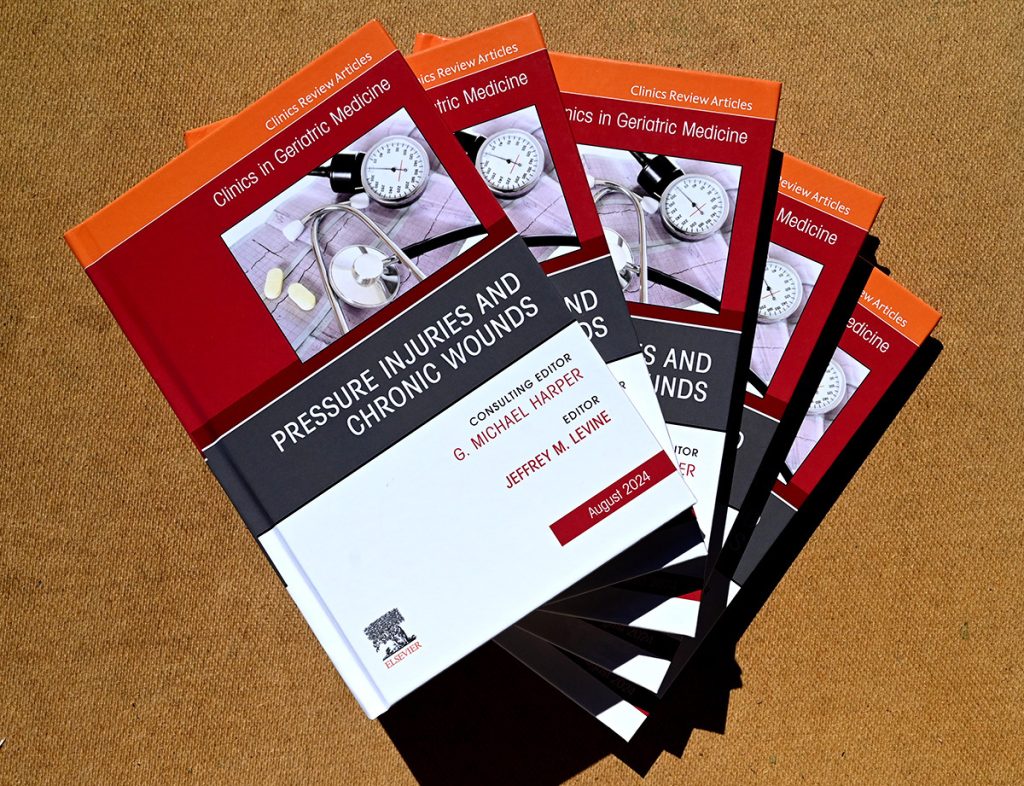
As a geriatrician, I have spent more than three decades caring for older adults with pressure injuries and chronic wounds in New York City, in nursing homes, hospitals, and outpatient practice. Over those years, one lesson has stood out: wound care is rarely taught in medical school or residency, yet primary care practitioners and geriatricians are the clinicians most likely to encounter these wounds. Too often, clinicians feel unprepared to assess wounds, make treatment decisions, or guide patients and families through difficult choices. Closing that education gap was my goal in editing this volume.
The following essay is the Preface to the volume of Clinics in Geriatric Medicine entitled Pressure Injuries and Chronic Wounds, which I edited for Elsevier Publishers (reproduced with permission). It summarizes my perspective on wound care for geriatricians and primary care practitioners.
* * * * * * * * * * * * * *
Pressure injuries (formerly referred to as bedsores, decubitus ulcers, or pressure sores) were designated a geriatric syndrome in the late twentieth century as they satisfy the criteria of being highly prevalent, multifactorial, and associated with substantial morbidity and poor outcomes. In the ensuing decades the topic of pressure injuries lagged as research and knowledge of other geriatric syndromes, such as delirium, dementia, and falls moved forward. Today, wound care receives little attention in medical training, and many primary care providers— including geriatricians—are often poorly equipped to care for these entities that result in an array of adverse outcomes. Because of their common occurrence in persons of advanced age, geriatricians are in an ideal position to assume the lead in caring for pressure injuries and chronic wounds, and thus the need for this issue.
Wound care is a truly interdisciplinary specialty that requires a team approach and engagement of the patient and their support system. Treatment involves a variety of medical and surgical subspecialists, nutritionists, nurses, and rehabilitation personnel, including occupational therapy, physical therapy, and speech therapy. The spectrum of knowledge required for decision making includes wound assessment, differential diagnosis, pathophysiology of wound healing, palliative care, wound bed preparation, and the formulary of wound care products and technologies. The clinician must be aware of the scope of knowledge and expertise of subspecialties including dermatology, general surgery, plastic surgery, vascular surgery, and podiatry, to collaborate effectively for the most optimum patient outcome.
Wound care involves addressing complex health needs that render assessment and decision-making challenging. These include examining patients who are immobile and in pain, shepherding patients through transitions between care settings, care planning based on the values and goals of patients and families, educating patients and families on treatment choices, including aggressive and sometimes futile procedures, and coordinating care between multiple providers.
A patient-centered approach incorporates the 4Ms—what Matters, Medication, Mind, and Mobility, which organizes complex care for older people based on what is important to them. Successful wound care requires the clinician be familiar with processes, regulations, and limitations imposed by components of the health care continuum, including outpatient, assisted living, skilled nursing, and post acute long-term care, long-term acute care hospitals, and acute care hospitals. The practice of person-centered care requires the clinician must be aware of the cultural and economic aspects of wound care as well as associated psychiatric and psychosocial issues.
Critical decisions include when to call consultants, which consultants to call, and whether to harness advanced wound-healing technologies and aggressive procedures, with realistic patient and family education as part of the process. To accomplish informed assessment and decision making, the clinician must be knowledgeable regarding the pathophysiologic processes of wound healing and the impact of concomitant comorbidities. The breadth of required knowledge and skill can lead the practitioner to sidestep critical issues or delegate decision making to providers who may be unequipped to handle the true scope and complexity of critical wound-related issues.
For this issue of Clinics in Geriatric Medicine, I invited leaders in the field to share their knowledge and expertise with the goal of educating clinicians on the basics of wound care. It is both an honor and a privilege to have the opportunity to bring together information that will improve care of vulnerable adults in an area where it is most needed.
* * * * * * * * * * * * * *
Citation: Levine JM, ed. Pressure Injuries and Chronic Wounds. Clinics in Geriatric Medicine. 2024;40(3). Elsevier. View the preface at Clinics in Geriatric Medicine
RELATED POSTS
New Reference Work on Pressure Injuries and Chronic Wounds
Skin Failure and Pressure Injuries: The Search for Clarity
Teaching Wound Care at the American College of Physicians Annual Meeting
Wound Care in the Geriatrics Review Syllabus
New Review on Aging Skin, with Considerations for Clinicians