
Imagine a disease that causes pain, disfigurement, amputations, infections, sepsis, and death, that results in billions of dollars in treatment costs, yet is barely taught in medical school. Welcome to the world of wound care, where many American doctors graduate knowing little about chronic wounds such as pressure injuries, venous and arterial ulcers, and diabetic foot ulcers.
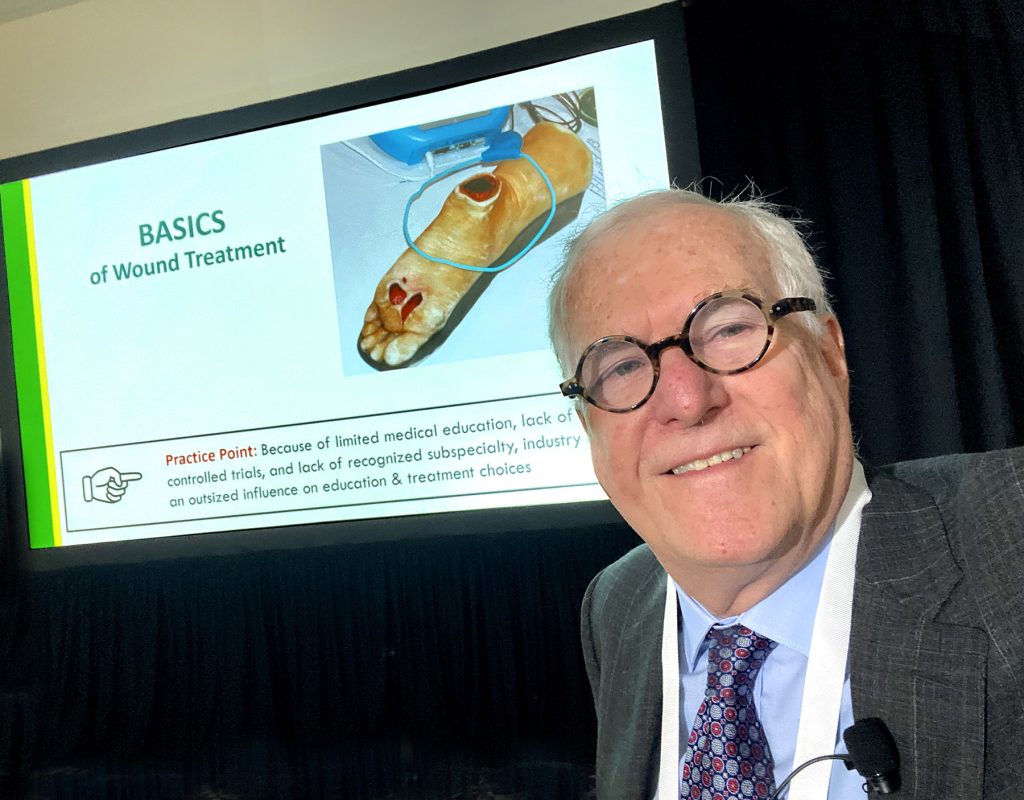
I had the opportunity to teach a session on wound care at the American College of Physicians (ACP) 2025 Annual Meeting in New Orleans. A major thrust of my career is to fill this education gap and teach physicians about this important topic.
Wound care involves complex health needs that make assessment and decision-making challenging. These include examining patients who are immobile and in pain, shepherding patients through transitions between care settings, care planning based on the values and goals of patients and families, educating patients and families on treatment choices (including aggressive and sometimes futile procedures), and coordinating care among multiple providers. It was my honor to be invited by ACP to teach a roomful of young primary care providers the basics of wound care.
Why Primary Care Physicians Need Wound Care Skills
Primary care physicians are often the first to see a chronic wound, yet the last to be consulted about it. Wound care is frequently delegated to nurses or specialists, while the underlying causes, such as immobility, malnutrition, poor circulation, and uncontrolled diabetes, fall squarely within the primary care physician’s domain. A wound is often a window into the patient’s overall health.
When physicians understand wound care, patients benefit. Wounds are recognized and documented earlier, their causes are treated rather than simply covered with dressings, and expectations are set realistically, including the recognition that some wounds will not heal at the end of life. Clear physician documentation also matters when questions later arise about whether a wound could have been prevented.
Teaching the next generation of physicians is one of the most rewarding parts of my work, and I hope to see wound care take its rightful place in medical education.
* * * * * * * * * * * * * *
RELATED POSTS:
Wound Care for Geriatricians and Primary Care Practitioners
New Reference Work on Pressure Injuries and Chronic Wounds
Academic Promotion at the Mount Sinai School of Medicine