
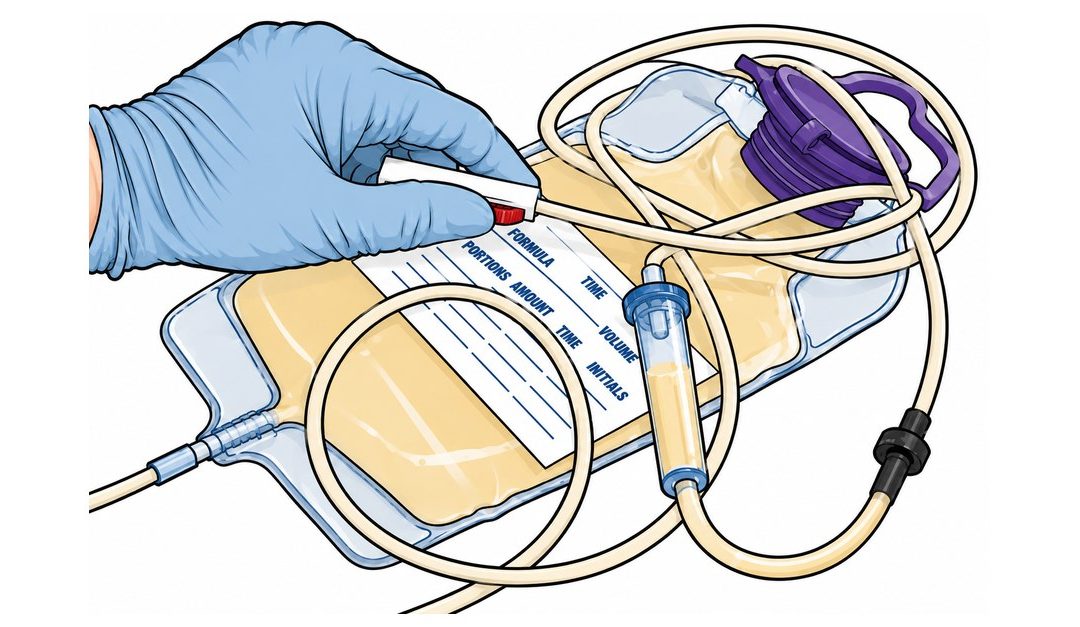
Good nutrition is essential for wound healing. Malnutrition, inadequate protein intake, and unintended weight loss are associated with delayed healing of pressure injuries, also known as bedsores or pressure ulcers. These relationships have led many clinicians and families to assume that feeding tubes protect the skin and prevent pressure injuries. However, the evidence does not support this assumption, particularly in patients with advanced dementia.
Key Points
- Adequate nutrition supports wound healing, but a feeding tube is simply a means of delivering nutrients. It does not relieve pressure, shear, or impaired tissue perfusion.
- In patients with advanced dementia, feeding tubes have been associated with an increased risk of pressure injuries and reduced likelihood of healing.
- The presence of a pressure injury alone is not an indication for feeding tube placement.
Tube Feeding and Pressure Injuries: What the Evidence Shows
In a landmark 2012 study, Teno and colleagues found that nursing home residents with advanced dementia who received percutaneous endoscopic gastrostomy (PEG) tubes were approximately twice as likely to develop new pressure injuries. Among residents with existing pressure injuries, those receiving PEG tubes were less likely to experience healing. A 2021 Cochrane review found no evidence that tube feeding prolongs survival in severe dementia and moderate-certainty evidence that PEG feeding increases the risk of pressure injuries. The American Geriatrics Society recommends careful hand feeding rather than feeding tubes for patients with advanced dementia.
Although these observational findings do not establish causation, several factors may help explain the association:
- Positioning requirements. To reduce aspiration and reflux, patients receiving tube feedings are generally positioned with the head of the bed elevated 30–45 degrees. This position can increase pressure and shear over the sacrum and coccyx, particularly when patients slide downward in bed. Pressure injury prevention guidelines generally recommend limiting head-of-bed elevation to 30 degrees when clinically feasible, creating a potential conflict between aspiration precautions and pressure injury prevention.
- Reduced opportunities for repositioning. Prolonged or continuous feeding may complicate repositioning schedules in profoundly immobile patients, although feeding should not routinely prevent turning.
- Moisture and incontinence. Tube feeding may contribute to diarrhea and fecal incontinence, increasing moisture exposure and susceptibility to skin breakdown.
- Underlying illness. Patients requiring feeding tubes frequently have advanced neurological disease, immobility, and systemic illness that compromise tissue repair regardless of nutritional support. Moreover, feeding interruptions and gastrointestinal intolerance may prevent delivery of prescribed nutritional requirements.
These considerations underscore the importance of integrating aspiration precautions with individualized repositioning, pressure redistribution, and skin protection.
When Is Tube Feeding Appropriate?
These findings should not be generalized to all patients. Enteral nutrition remains appropriate for selected individuals who cannot meet their nutritional needs orally, particularly when recovery is anticipated following stroke, surgery, or critical illness. In such circumstances, tube feeding may correct nutritional deficiencies and support wound healing.
However, evidence supporting nutritional supplementation, including high-protein formulations enriched with arginine, zinc, and antioxidants, is stronger than evidence demonstrating that feeding tube placement itself improves pressure injury outcomes.
Skin Failure and Goals of Care
In advanced illness, declining nutritional intake, immobility, impaired perfusion, and systemic inflammation may reflect progressive physiological deterioration rather than a reversible nutritional deficiency. The concept of skin failure recognizes that tissue breakdown may occur despite appropriate preventive care, although its definition and diagnostic criteria remain debated.
For patients with limited life expectancy, feeding tube placement may introduce additional burdens without improving comfort or wound healing. In these circumstances, symptom management, comfort, and dignity may be more appropriate goals than complete wound closure.
Clinicians trained in geriatrics and palliative care are particularly well equipped to help patients and families navigate these difficult decisions. Their expertise in prognosis, goals-of-care discussions, and shared decision-making helps families distinguish between interventions that are technically possible and those likely to provide meaningful benefit. Discussions should address the patient’s preferences, anticipated benefits, potential burdens, and available alternatives, with decisions clearly documented in the medical record.
The Bottom Line
Adequate nutrition is essential for wound healing, but inserting a feeding tube is not, by itself, an effective treatment for pressure injuries. The decision should be individualized, taking into account the patient’s underlying illness, prognosis, nutritional needs, and goals of care.
The central question is not whether nutrition matters, but whether inserting a feeding tube will meaningfully improve outcomes for a particular patient. For more on pressure injury prevention, skin failure, and standards of care in long-term care, see my consulting and education page.
Selected references
Teno JM, Gozalo PL, Mitchell SL, et al. Feeding tubes and the prevention or healing of pressure ulcers. Arch Intern Med. 2012;172(9):697-701. doi:10.1001/archinternmed.2012.1200.
American Geriatrics Society Ethics Committee and Clinical Practice and Models of Care Committee. American Geriatrics Society feeding tubes in advanced dementia position statement. J Am Geriatr Soc. 2014;62(8):1590-1593. doi:10.1111/jgs.12924.
Langer G, Fink A. Nutritional interventions for preventing and treating pressure ulcers. Cochrane Database Syst Rev. 2014;(6):CD003216. doi:10.1002/14651858.CD003216.pub2.
Related Reading
Skin Failure or Pressure Injury? Seeing Is Believing
A Placebo Device to Heal Pressure Injuries: A Cautionary Tale
Reclaiming a Lost Geriatric Syndrome at the AGS Annual Meeting